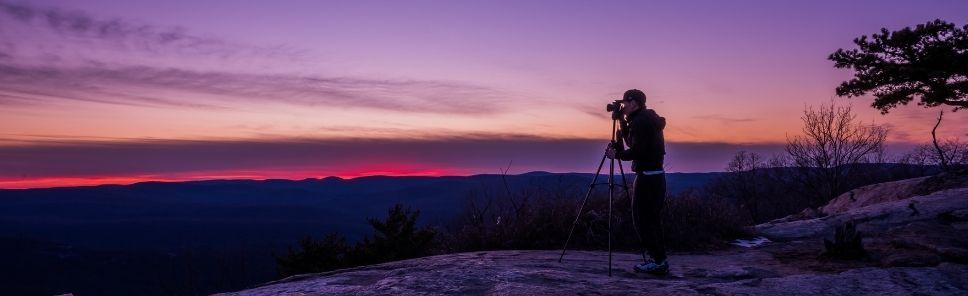
How to Capture Better Sunset Photos
There’s a reason photographers plan entire trips around sunrise and sunset. The light is softer, the colors are richer,
and the landscape takes on a completely different feel than it does in the middle of the day. But while sunsets are some of the easiest conditions to find, they can also be surprisingly difficult to photograph well. Here are a few simple tips to help you capture your next sunset.
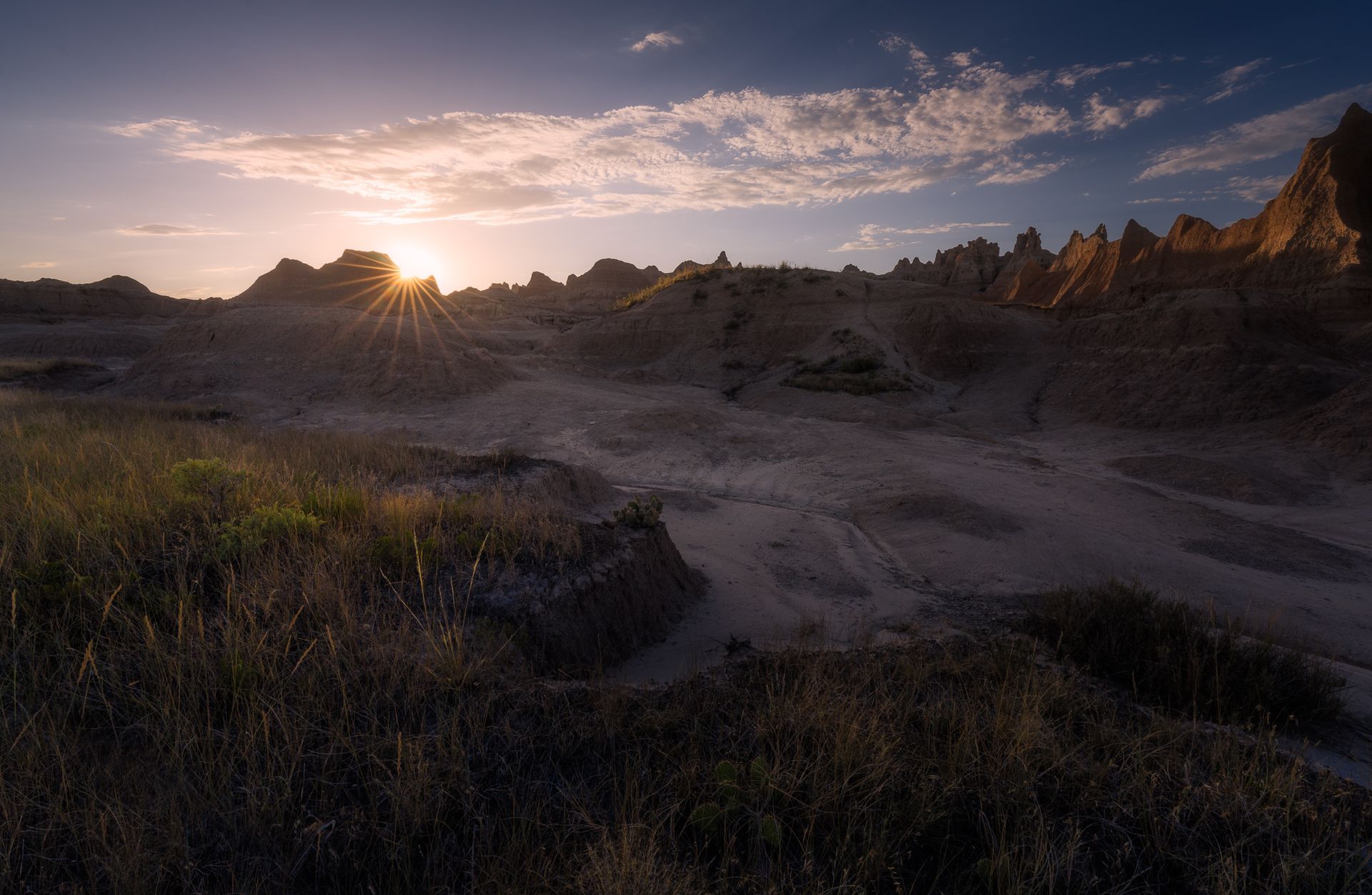
One of the biggest mistakes photographers make is arriving just as the sun reaches the horizon. Some of the best
light actually happens 20–30 minutes before sunset (a period known as golden hour), and often continues well after the sun has disappeared (blue hour). Arriving early gives you time to explore different compositions and set up before the light starts changing quickly. Staying through blue hour can reward you with soft pastel skies and balanced light that’s perfect for landscape photography.
As daylight fades, shutter speeds become longer, making a sturdy tripod one of the most valuable accessories you
can bring. The ProMaster XC-M Carbon Fiber Tripod is an excellent option for landscape photographers who want stability without carrying unnecessary weight on the trail.
While it’s tempting to point your camera directly at the sunset, some of the strongest images happen when you
photograph the light instead of the sun itself. Turn around and watch how the warm light illuminates mountains, trees, city skylines, or even people. Side lighting and backlighting add texture, depth, and mood that often create a more compelling photograph than the sun alone.
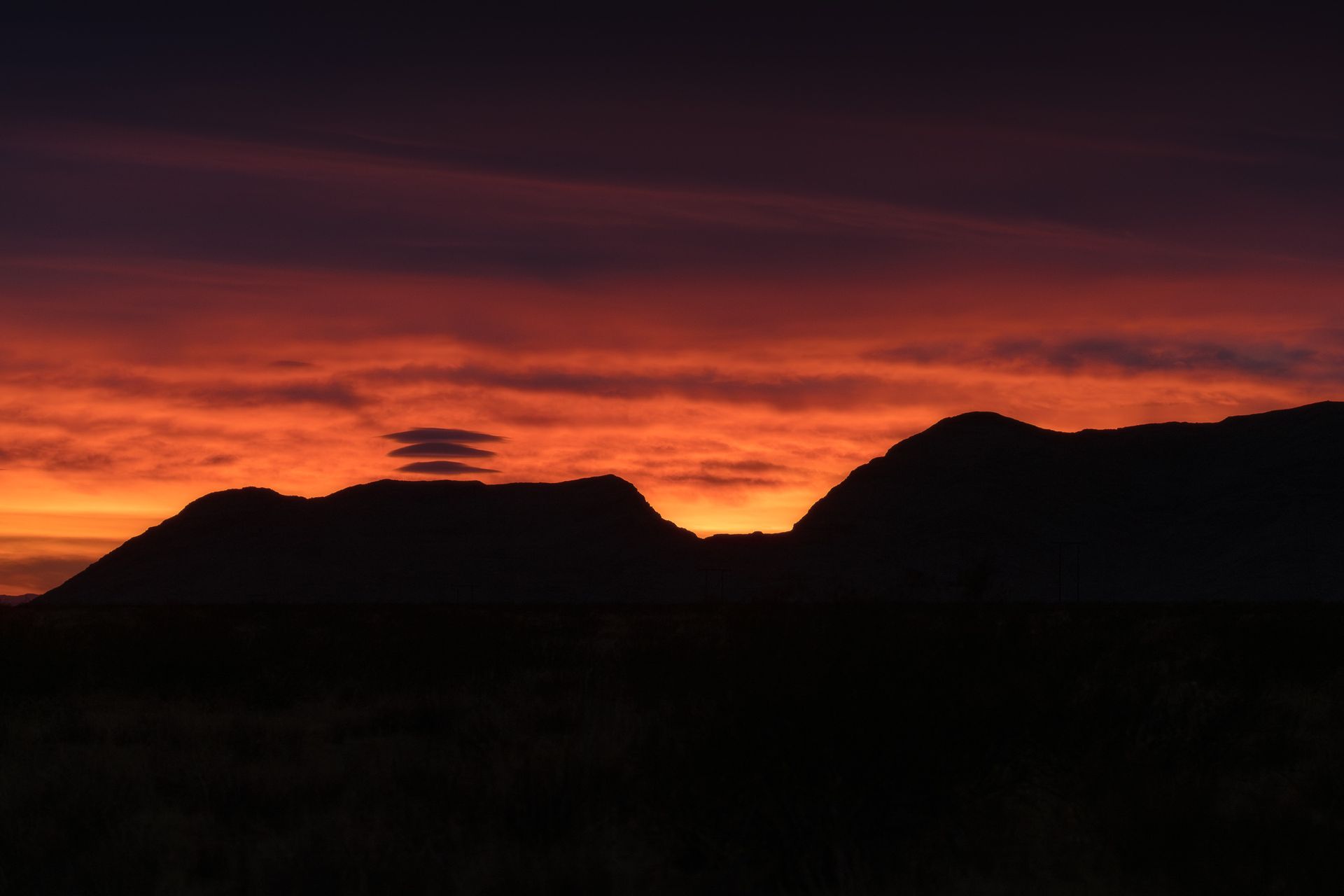
Sunsets produce some of the highest contrast you’ll encounter. If your image looks too bright, the colorful details
around the sun can quickly disappear. A good starting point is to slightly underexpose your photo to preserve the highlights. If you’re shooting in RAW, you’ll have much more flexibility to brighten shadows later without sacrificing those beautiful sunset colors. In fact, to enhance those colors even further, A circular polarizer filter can also help reduce glare and improve contrast, especially around water or wet rocks. Just be careful not to over-polarize very wide scenes once the sun gets low, as it can create uneven skies.
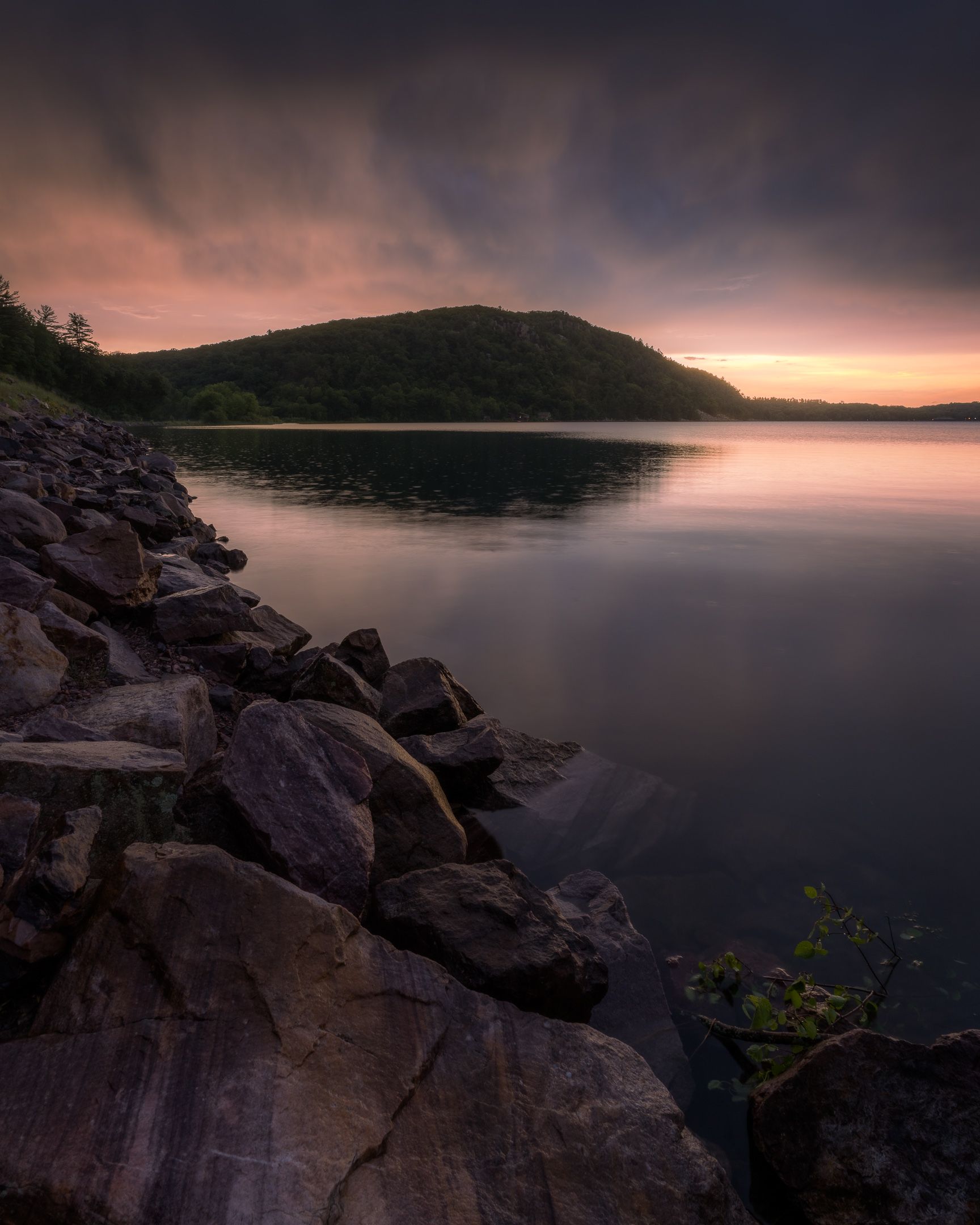
Now when it comes to composition, a vibrant sky can certainly grab attention, but the foreground is what can give
your image depth and tell a story. Look for rocks, flowers, driftwood, reflections, or leading lines that draw the viewer into the scene. Taking a few extra minutes to find an interesting foreground can make the difference between a snapshot and an image you’ll want to print. One of my personal favorite lenses for scenes like this is the Sony FE 16mm f/1.8 G. This lens allows you to include both dramatic skies and an interesting foreground in a single frame. And since it has a flat front element, you can pair it with a circular polarizer without issue.
The best colors don’t always happen the moment the sun touches the horizon. Sometimes the sky comes alive 15 or
even 30 minutes later. With a little preparation, thoughtful composition, and the right equipment, you’ll start creating sunset photographs that capture more than just color, you'll capture moments and atmosphere as a whole. So overall, what are the elements for sunsets? It's a mix of strong composition, the right light, and the extra pieces of gear that can elevate your scene. Stay a little longer, experiment with different concepts, and elevate your creativity. Every sunset is different, and that’s what makes photographing them so rewarding.
Recent POsts